
Red Hat Research Quarterly
“We’ve got to have everyone”: combining research innovation with enterprise operations
Red Hat Research Quarterly
“We’ve got to have everyone”: combining research innovation with enterprise operations
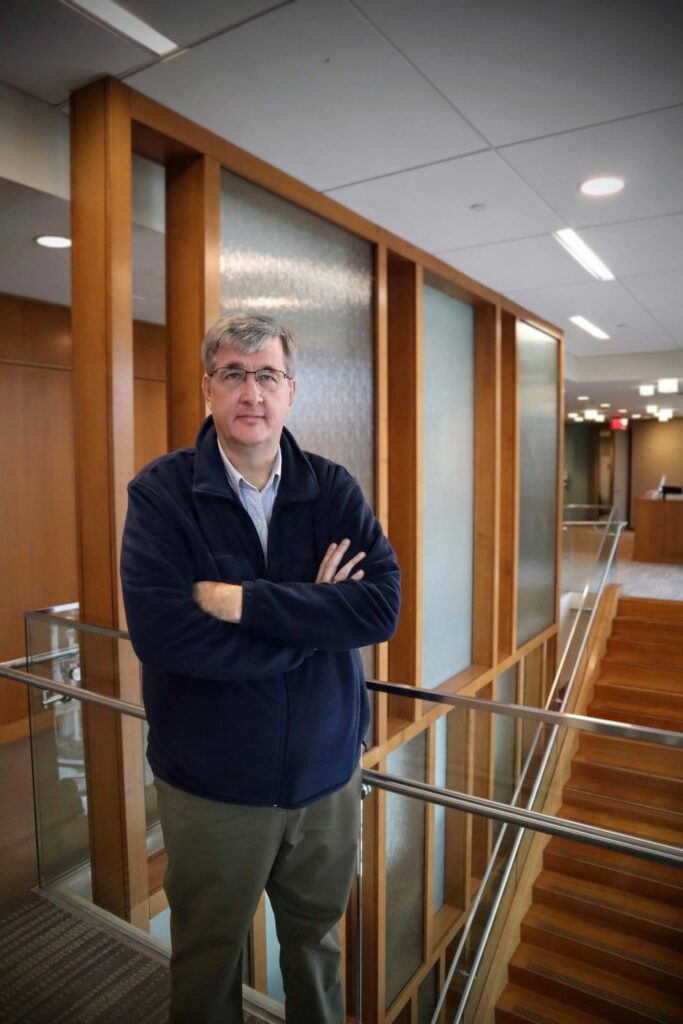
Ask Gen AI to design a CIO action figure, and you might get a guy in a dark suit with a briefcase and laptop as accessories. That won’t give you an accurate idea of Boston University CIO Chris Sedore, who’s held the post at Syracuse University, University of Texas at Austin, and Tufts University. You […]
about the author
Stefanie Chiras
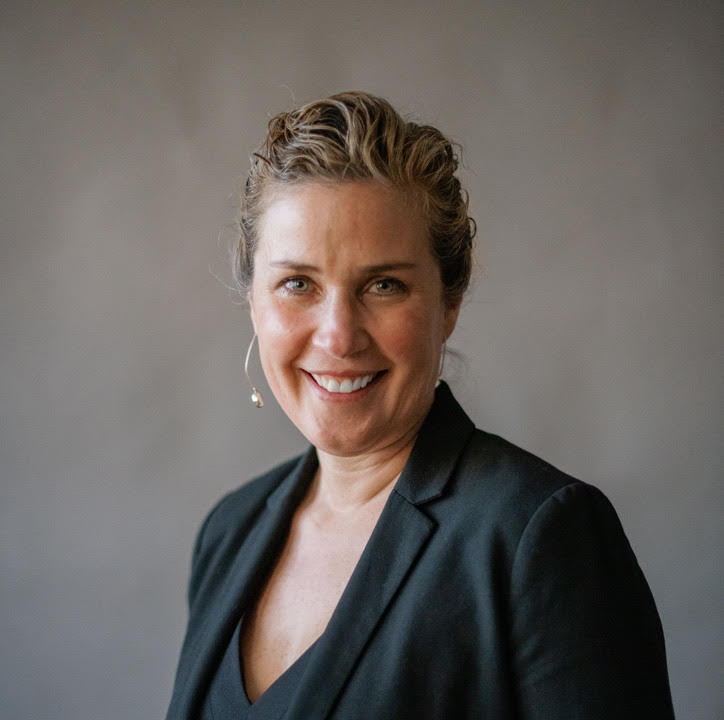
Stefanie Chiras, Ph.D., is the Senior Vice President, AI Innovation Hub at Red Hat, leading the strategy for engaging with regional AI ecosystems. This groundbreaking work includes driving Red Hat’s contribution to The Open Accelerator, a new Massachusetts-based AI accelerator for AI startups.
Article featured in
Red Hat Research Quarterly
Winter 2025-26
In this issue


Marek Grác
Martin Ukrop
Clodagh Walsh

Ryan Jenkins
Heidi Dempsey
Peter Santhanam
Ask Gen AI to design a CIO action figure, and you might get a guy in a dark suit with a briefcase and laptop as accessories. That won’t give you an accurate idea of Boston University CIO Chris Sedore, who’s held the post at Syracuse University, University of Texas at Austin, and Tufts University. You might get closer with extras like a diesel engine, a heavily used passport, and a book on building explosives.
We asked Stefanie Chiras, Red Hat Senior Vice President, AI Innovation Hub, to talk to Chris about their shared interest in the Massachusetts AI Hub, an initiative to facilitate connections among industry, academia, and government to increase access to data and compute resources for AI at an impactful scale. The initiative includes developing a high-performance AI Computing Resource (AICR) for AI-driven research, innovation, and startups. The Commonwealth announced an initial $31 million to launch the AICR environment as the first phase of a planned $120 million in joint public-private funding to support the AI Hub’s initiatives.
In her former post as SVP for Red Hat’s global partner ecosystem, Stefanie honed her expertise in building strong collaborations. As Chris and Stefanie discuss below, bringing together a diversified set of interests, needs, and skills will be just as important as advanced technology to realize the goals of the Massachusetts AI Hub and to expand the model and its benefits to other regions. —Shaun Strohmer, Ed.
Stefanie Chiras: The Commonwealth of Massachusetts has made some bold statements about what it wants to do around the Massachusetts AI Hub, making big investments in creating the AICR cluster, which BU is a partner in. I know we’re both very passionate about that initiative, but let’s start with what got you excited about the university computing space in the first place. I often think about what a long strange trip my career has been—had I not grown up working on cars and had a physics teacher in high school who literally changed my life, who knows what I would be doing.
Chris Sedore: We share some background, then. I grew up on a farm and worked on farm tools and cars. I also had a physics teacher who was really influential. I’ve always been hands-on. One of the earliest things I did in computing was try to figure out how to internetwork computers with my own serial protocols. What kept me going is that I’ve always done things that are fun and interesting. For me, the definition of fun and interesting is, “Am I solving a problem?” It almost doesn’t matter what the problem is. If you said “I have a nuclear engineering problem,” I don’t know anything about nuclear engineering, but I’d be motivated to go learn it to solve the problem.
Stefanie Chiras: I’m 100% with you on problem-solving. Seeking out the next interesting problem is one of the most exciting things about the area we’re in. And the technology changes so quickly that there’s always the next new tool in your toolbox to use. Another thing we have in common is that I pursued my PhD because I wanted to be a professor, and you’ve been focused in the university and academic space. What attracted you to that? Because university CIO is a specific area of expertise.
Chris Sedore: It’s a progression in solving problems. When I started in networking, I worked with Cisco AGS series stuff. I worked on the asyncio implementation for the FreeBSD kernel. Then I was working at Syracuse University, and I got to where I wanted bigger problems. My choice was to either go deeper down the tech rabbit hole or go the other way and start to manage bigger things and go the scale route. So I started leading IT operations and building bigger things. If you identify problems that people have and you solve them, you’ll get more problems and they’ll get bigger over time.
Stefanie Chiras: Is there anything about problems posed in an academic space that particularly intrigues you?
Chris Sedore: A couple of things. One is that I’m invested in the mission: educating people, especially that next generation of citizens. Just this last weekend, I was at a data science hackathon with a track about how students could improve what BU does with technology and AI. I’ve been in this for more than three decades now, and still I woke up that morning energized and ready to go. The other thing is that the adventure is in higher education. I’ve been all over the world: I’ve been to North Korea twice, I spent time on the West Bank as part of some work I did there. At one point, I was part of setting up facilities for someone who did research with explosives. The range of things that you do at universities is amazing, and you never run out of interesting things and interesting people to work with.
Bridging the research gap
Stefanie Chiras: I understand what you mean. When I look at my career journey, like you, being deeply technical then going what you called the scale route, it’s the diversity of technology, challenges, and decision making that is so intriguing. You also straddle different parts of the university: there’s the IT to support the research work, and there’s the IT to support the university itself. How do the problems they pose differ?

Chris Sedore speaks to attendees of Boston University’s Security Camp 2025, a free, one-day conference for system, network, or security administrators, security managers in higher education, or any faculty, staff, and students .
Chris Sedore: They very much evolved on different paths. Physics is a good example of this: there’s a long history in physics of using computation to enable what they do. On the administrative side, it’s about leveraging technology for automation: for processing, storage, accounting—all the things we have to do to make a university. Even up to today, they run largely on parallel tracks. We have mostly interactive workloads to support the operation of the university: student information systems, HR, finance, all those learning management systems. We have some interactive workloads on the research side, but a lot more of it is batch-scheduled computation: I have a huge chunk of data, and I want to run it through these algorithms and get an answer, or a simulation, or a model.
Stefanie Chiras: As we’re pursuing industry and university collaboration around the Mass AI Hub, it seems like those paths are starting to converge. What’s driving that?
Chris Sedore: One, the vast majority of our researchers are in this because they want to have impact. We still have things on the research side that are years, maybe decades away from actual use. It’s part of what universities do—what’s exciting about being here. But we also have a lot of things where we want stuff to go from lab to use in days. Let’s say I’ve got a great machine-learning algorithm that looks for patterns in EKGs, and I’ve produced some predictive capability from that. The next step is to ask how we use this to help people. That becomes a production interactive workload, but it’s still part of the research program.
Second, we’re facing more compliance regimes in research. Research used to be the wild west, and now we’re seeing—for a variety of good reasons—that we need to keep that data secure. So we’re now trying to intersect these worlds, because we’ve long had the security and compliance parts on the enterprise side, and we’ve long had the uptime and other operational discipline pieces. Another factor is reproducibility: if I run a research study and I come up with a finding, you should be able to run that research study and replicate the finding. That’s an important part of how we do science.
The power of an ecosystem
Stefanie Chiras: So how do we move that forward? I think we agree that it’s going to take the involvement of many stakeholders, which is one of the challenges an AI Hub is designed to solve.
Chris Sedore: Massachusetts is an innovation engine in the United States and in the world. Especially in life sciences and healthcare, Boston is the place where this happens. I’m thrilled by the state’s interest in positioning us for current challenges and for the next generation of technology.
The fuel for this initiative is an AI data hub—a way to share datasets. It’s bringing together universities and industry so we can supercharge what we’re doing around, say, life sciences. We know AI is going to drive a lot of that research work, but how do we bring that into practice?
This is where the state’s leadership position is going to empower us to put things into production for impact and fuel the startup ecosystem.
This is where the state’s leadership position is going to empower us to put things into production for impact, fuel the startup ecosystem, and figure out how we solve these data and security issues. We need to have operational models. This is where it’s great to see Red Hat engaged, because I don’t want to build that at the university level. We need industry to solve this stuff, on the software side and on the hardware side. We’re going to see all these different pieces—inference-only hardware, edge AI—and we need the ecosystem, because the solutions are not all going to come from the same company
Stefanie Chiras:Not to mention, AI is complex in the layers of the stack like nothing we’ve ever seen before. Now you have the model layer, which we’ve never had to worry about. If someone is coming into this space, how do they very quickly understand the right stack to use? How do they engage in an ecosystem of players in a way that preserves the right to choose what kind of technology and work they want to do?
Chris Sedore: That is really important. I want a healthy competitive ecosystem. I need the ability to target the best solution for a particular problem. That’s why we have to make the ecosystem play here, with industry driving this forward. We also need that open source piece, because if we lock all this up, we don’t just lose price competition in the market—we don’t get an innovative ecosystem.
Stefanie Chiras: What can companies like Red Hat do? If we’re talking about nascent startups that are in the research world now, but one day they want to have an impact in the broader world, what could we be doing right now to make the move between those worlds easier? There’s technology, but they’d also need to know about data sovereignty aspects, how to deal with regulatory requirements, maybe how it would work in the United States versus how it would work in Europe. How do we keep those people from being overwhelmed by those requirements?
Chris Sedore: There’s several dimensions we can work on here. First, it’s reducing friction. It’s how we enable and empower our researchers with tools and capabilities and, as you say, help with data sovereignty and jurisdictional issues. We can offer support structures, so when they’re ready to do something in production, we can be there to help navigate some of those complexities, even things like writing service agreements or contracts with people, because we know how to do that on the enterprise side.
Also, we have a pretty well-evolved set of practices for enterprise. If I want to do a startup, I’m going to build containerized applications, I’m going to use CI/CD pipelines. How do we make sure that we have the right on-ramps, the right capabilities? When I think about this ecosystem, those startups—they may be producing AI products, they may be producing inference hardware—how do we make sure that there’s a place for all these things to plug in and take advantage of what you have? It not only reduces friction but it makes it easy to add capabilities. This is also what’s great about open source: you can pull from so many different dimensions and directions.
You can see this around life sciences: the resources, the lab space, the talent, the capabilities, the companies that exist make it easy to come here and do research. If you need it, you can find it. What is the AI version of that? We have lots of companies locally. We have universities—there’s almost no innovation in whatever domain they operate in that isn’t anchored with universities. We’ve got everything we need. Let’s get the alignment of all of that around AI.
Again, security, privacy, and compliance are critical. We need a place where I know if I come in here as a researcher or startup and I follow the rules of the road, I can operate safely with people’s data. And we need to be able to articulate that in a way that makes people comfortable about how their data is being processed, stored, and analyzed. And I don’t know that we’ve solved all those problems yet.
Stefanie Chiras: And solving those problems is going to take that diverse ecosystem of academics, startups, and industry partners, as well as investors. That all has to come together to create that trust and move the needle forward.
Building a center of gravity
Stefanie Chiras: Governor Healey has been clear that one of the outcomes we’re looking for is shining a light on the innovators already here and enticing them to stay in Massachusetts so we can create that center of gravity. Then you get more innovators, you get more companies, and that ecosystem continues to grow and it creates momentum. What are some things you see as critical factors to encourage that?
Chris Sedore: I think you’ve hit on a bunch of them in your question. One, it’s the collaborative ethos: we’re all going to work together. That’s a big attractor of talent coming to BU, and we work with the institutions across Boston and the Commonwealth, of course. It’s this notion that we have a great ecosystem here, so you can come and work on the problems that you have unique expertise in. Then it’s opportunity for impact. There are tremendous opportunities here for AI in healthcare, AI in education, in AI itself.
Stefanie Chiras: One of the cool things about AI is that it’s driving more of a horizontal focus, which also brings in a broader set of players. If you look at some of the industry verticals—life sciences, robotics, manufacturing—AI can support all of it. That offers a new opportunity for AI to develop a flourishing support system for innovation to happen and then dock into any of the industry verticals where that expertise may lie.
Chris Sedore: Oh, 100%. Even if you just take life sciences, there are manufacturing automation applications: how can I use robotics to pick up samples and move them down lines? Maybe we can modify experiments midstream, looking for different kinds of permutations and doing pattern recognition, which we could do with humans if only we had enough of them and could afford them.
Even in our university operations, we’re thinking about AI as a horizontal force. I can give you a straightforward example. We spend a lot of time with students helping them do things like submit immunization records or put in a housing application. We do that out of the health services office. We do it out of enrollment. We do it out of our individual academic programs. What if we looked horizontally and said, this is the we-need-you-to-do stuff function. Maybe there’s an AI service that is really the student’s personal assistant, like, “Hey Chris, we need you to do your registration. We need you to verify your emergency contact information.” Rather than having to build that 15 times, we build it one time. It navigates those verticals and prioritizes them for me. It’s a small-scale example, but that kind of thinking is really powerful from an operations perspective.
We need the production discipline, the security, the scalability, and the operational rigor that exist on the enterprise side, while still preserving the ability to innovate quickly.
Stefanie Chiras: It comes back to the value of a platform. There’s an AI capability that gets applied in all these different areas. As you said earlier, we’re trying to develop a platform where every problem can have a custom solution and do an amazing job, but then everyone else who deploys from that platform gets the value from that solution. I think it comes back to getting everyone involved, too. If you look at the current ecosystem and all the investment that’s being made—and honestly there is a thriving innovation ecosystem here in Massachusetts—what are some of those opportunities that would kickstart that flywheel?
Chris Sedore: I’ll start with what BU and Red Hat have been doing together around the MOC. We built something really interesting there, and we have a variety of folks using it. Now we need to talk about what the next phase looks like. MOC actually predates AICR, and we’ve been deliberate about positioning this next phase as an additional, complementary investment in the AI ecosystem we’re collectively building in Massachusetts.
If MOC is a platform for doing the kind of work we’ve been talking about today, then it has to support sovereign cloud functionality and robust multitenant capabilities. We need NIST 800-171 and HIPAA compliance, because a lot of the impact work we want to do requires that security layer. We also have to be able to provide a high degree of assurance around how data is handled, both for people’s comfort and for legal reasons.
We also need that AI dimension. We see an emerging ecosystem doing really interesting work around inference-only silicon. How do we get that plugged in and make it compliant? Key-value stores—how do we bring those in responsibly? This is where the research and enterprise worlds really intersect. We need the production discipline, the security, the scalability, and the operational rigor that exist on the enterprise side, while still preserving the ability to innovate quickly.
What we can do by bringing industry, academia, startups, and technology partners together is define a framework where new capabilities can plug in cleanly. You know what you’re connecting to. It works. It scales. It’s multitenant. It’s secure. And once you’re there, you get all the benefits of the broader ecosystem along with whatever unique capability you’re bringing—whether that’s hardware, software, or a new approach to applying AI in a clinical, life sciences, or manufacturing context. That’s where the real synergy comes from.
Stefanie Chiras: We’re super excited to be collaborating with you and the Commonwealth on what we can do. Nothing’s more magical than when you bring together a good hard problem and the people who are going to solve it. Reading through the economics report for Massachusetts, you start to get a view of all of the things that having the best technology in the toolbox could help.
Chris Sedore: And just to amplify your points, we’ve got to have everybody in this. Universities can’t go off and solve this. The days of a singleton startup going off and solving things are past—it’s too big. Industry will bring a lot, but they can’t solve it entirely. If we put all of those folks together, that’s the engine that’s going to drive this forward. Here in Massachusetts, we have every single thing we need to lead for another hundred years. All we have to do is interconnect those pieces and we are going to be working on the most important problems for the state, the country, and the world for another century. If you’re in industry, you’ve got a problem that you’re focused on solving. In academia and higher education, we’re developing the people who are going to be the next hundred years of problem solvers. I don’t expect to be around to see that, but I’m happy to contribute to being in a better place in 2126.
“Who we want to be”
Stefanie Chiras: On that note, what are some of the areas of AI innovation that you’re most excited about, Chris?
Chris Sedore: This is like picking your favorite child! I’m really excited about what this work is going to mean for educational equity, bending the cost curve in higher education, and building that pipeline for the next-generation workforce. As a simple example, the more students we can get through things like Calc 1 and Calc 2 and make them less scary, the more we can advance them into the research labs that happen here and make them part of propelling these solutions forward.
Nothing’s more magical than when you bring together a good hard problem and the people who are going to solve it.
And I’m particularly excited about healthcare. Stay with me here: I own a sawmill. I own an excavator. Last summer I built a building with my son up in Maine—I still work with my hands to stay sane. Now I want a trackloader for the next round of projects. I can take a picture of a piece of heavy equipment, paste it into ChatGPT and say, “Tell me what you know about this,” and it will respond, “The tracks aren’t too worn. The drive sprockets are okay. It looks like it’s been well greased.” I’m not just relying on this response, but I can confirm it. If you give it a picture of a running diesel engine and you can see exhaust, it’ll be like, “That’s grayish exhaust. It’s probably less problematic in an older diesel engine.”
Transpose that level of capability onto healthcare. We’re going to get there. I’m old, I need maintenance too. I had to get some X-rays done, and I took those X-rays, deidentified them, pasted them into ChatGPT, and asked it to tell me about them. When I saw the physician, he said almost word for word what ChatGPT said regarding the images. This is just the early days.
Stefanie Chiras: Wow! One of the things I’m excited about with the collaboration between Red Hat and BU and the whole ecosystem here in Massachusetts is that the universities are where the ideas are coming from. This new level of collaboration and way of working allows all of us to participate in that. That mission that attracted you to the universities—we all get a chance to participate in building that future.
Chris Sedore: When I sit down with a company like Red Hat—and I’ve had this happen many times—and I say, “Here’s the problem that I have,” then you say, “Oh yeah, we got a solution for that,” or, “We have people who could work with you on that,” which is even better because then we get to build something. That’s really where the power is. That’s what we’re doing in AICR, in terms of connecting universities, startups, industry, and the state. That says something about who we want to be.
Stefanie Chiras: That’s awesome. I know you and I will be talking a lot more about all of this, and I’m looking forward to that.
Chris Sedore: Awesome indeed.
SHARE THIS ARTICLE
More like this
The name Luke Hinds is well known in the open source security community. During his time as Distinguished Engineer and Security Engineering Lead for the Office of the CTO Red Hat, he acted as a security advisor to multiple open source organizations, worked with MIT Lincoln Laboratory to build Keylime, and created Sigstore, a wildly […]
“How many lives am I impacting?” That’s the question that set Akash Srivastava, Founding Manager of the Red Hat AI Innovation Team, on a path to developing the end-to-end open source LLM customization project known as InstructLab. A principal investigator (PI) at the MIT-IBM Watson AI Lab since 2019, Akash has a long professional history […]
John Goodhue has perspective. He was there at the birth of the internet and the development of the BBN Butterfly supercomputer, and now he’s a leader in one of the toughest challenges of the current age of technology—sustainable computing. Comparisons abound: one report says carbon emissions from cloud computing equal or exceed emissions from all […]
What if there were an open source web-based computing platform that not only accelerates the time it takes to share and analyze life-saving radiological data, but also allows for collaborative and novel research on this data, all hosted on a public cloud to democratize access? In 2018, Red Hat and Boston Children’s Hospital announced a […]
Everyone has an opinion on misinformation and AI these days, but few are as qualified to share it as computer vision expert and technology ethicist Walter Scheirer. Scheirer is the Dennis O. Doughty Collegiate Associate Professor of Computer Science and Engineering at the University of Notre Dame and a faculty affiliate of Notre Dame’s Technology […]
What is the role of the technologist when building the future? According to Boston University professor Jonathan Appavoo, “We must enable flight, not create bonds!” Professor Appavoo began his career as a Research Staff Member at IBM before returning to academia and winning the National Science Foundation’s CAREER award, the most prestigious NSF award for […]
Don’t tell engineering professor Miroslav Bureš that software testing can’t be exciting. As the System Testing IntelLigent Lab (STILL) lead at Czech Technical University in Prague (CTU), Bureš’s work bridges the gap between abstract mathematics and mission-critical healthcare and defense systems. His research focuses on system testing and test automation methods to give people new […]