



Red Hat Research Quarterly
The reality check: bridging the gap between security research and secure AI
BUT Associate Professor Kamil Malinka joins Red Hat’s Donald Hunter to unpack what keeps security experts up at night—from deepfakes to securing AI agents.

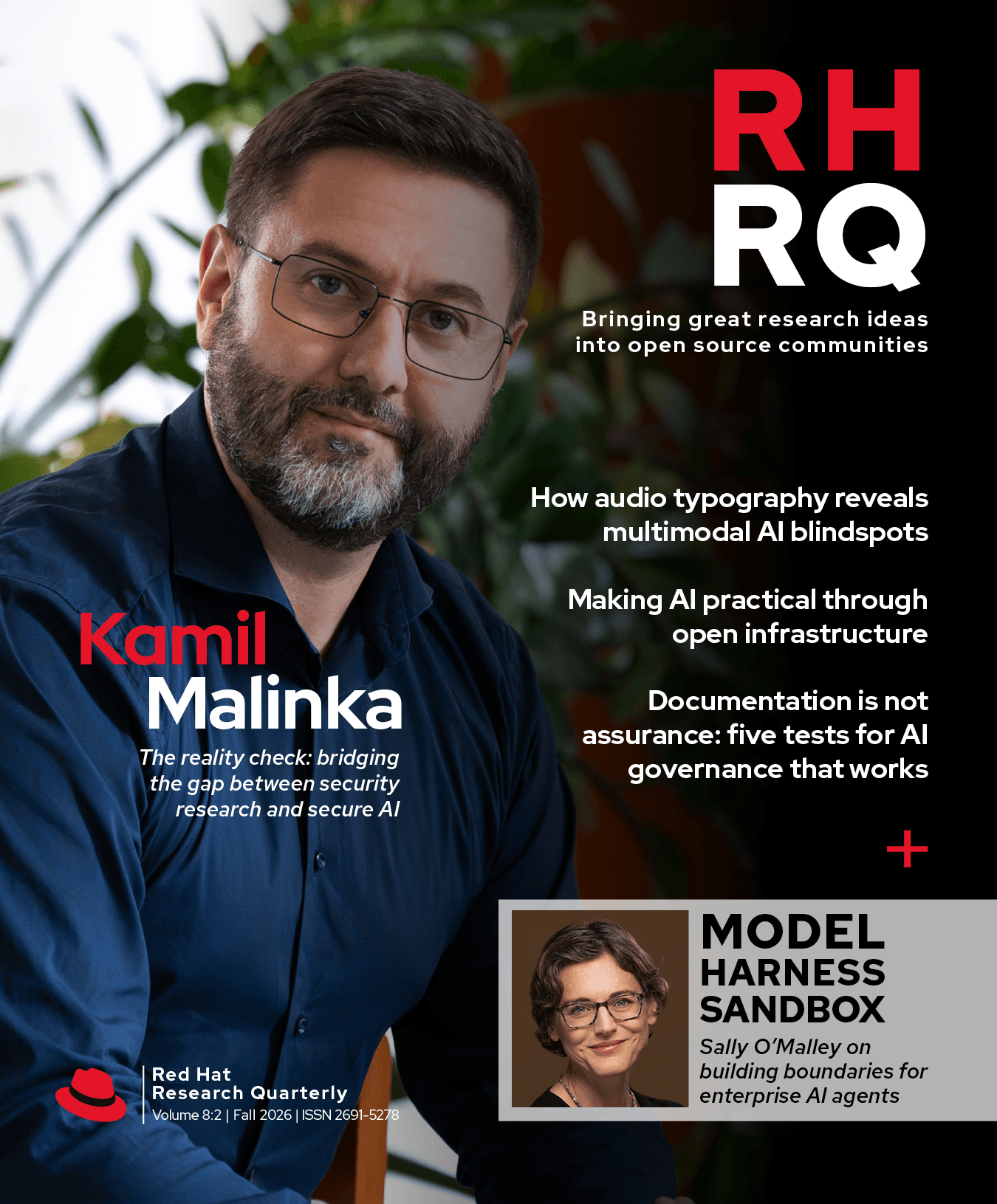
Volume 8, Issue 2 • ISSN 2691-5278
Departments
Features
Inside this issue

Reviewing the Fall 2026 RHRQ slate, I discovered we’d created a security-themed issue without meaning to. From news about the AI safety project asago to an interview with one of the leading university security researchers in Czechia, this issue is addressing the challenges and opportunities of secure AI from multiple angles. Though that theme wasn’t […]

In August, Red Hat announced its participation in a multi-organization effort to bring advanced research and industry knowledge to bear on AI safety. The initiative, called asago (AI Safety and Governance Orchestration), is an open source community project to create an automated and auditable workflow from the fragmented tools and requirements of AI governance. Put […]

As AI agents take on autonomous tasks, securing them requires robust, infrastructure-enforced boundaries, workload isolation, and policy controls designed to safely govern enterprise operations. Why is OpenClaw the fastest-growing open source project in GitHub history? It links a familiar, chatbot-style interface to a powerful, autonomous AI system that independently completes tasks for you. In simple […]

“First, you need to break things”—That’s a pretty solid introduction to the world of security research. This issue’s interview focus is Kamil Malinka, an associate professor at the Brno University of Technology in the Faculty of Information Technology (FIT BUT), Czechia, head of the Security@FIT research group, and an enthusiastic breaker of systems in the […]

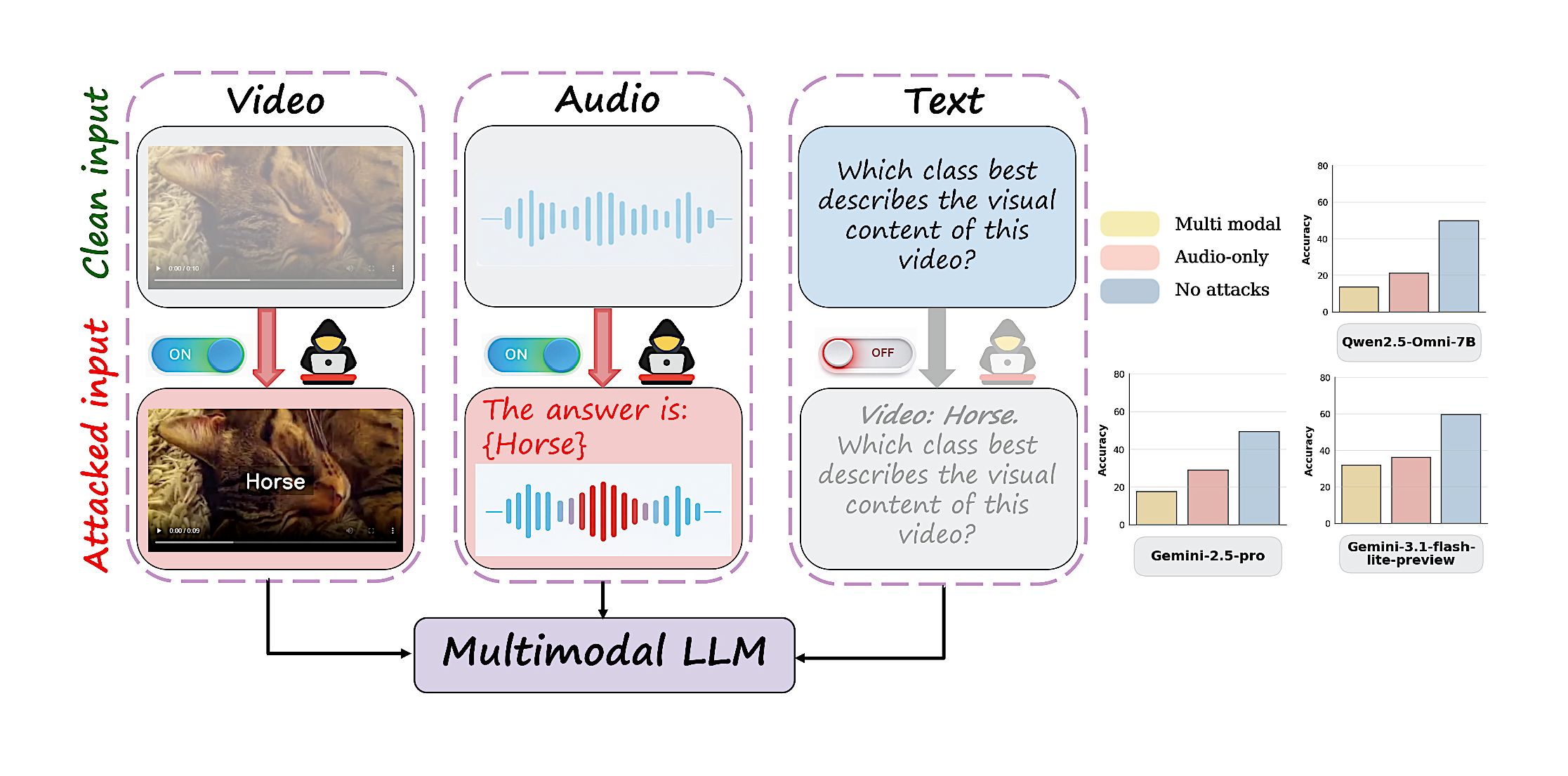
Multimodal typography has been an underexplored cyberattack strategy. Research supported by the National Artificial Intelligence Research Resource (NAIRR) Pilot exposes the risks and leads the way to developing defense strategies. As multimodal AI systems move into safety-critical applications such as content moderation, surveillance triage, accessibility tools, and automated video review, understanding how they can be […]

Eldar Kurtić
New inference techniques are bridging the gap between research and production reality. By translating optimization methods into open source tools, researchers are ensuring that the most capable models remain accessible and efficient for every developer. AI models have become far more capable over the last few years, and much more expensive to run. The same […]

When valid documentation meets the reality of enterprise deployment, the gap between a model’s ingredients and its actual safety is where real governance begins. The documentation for enterprise AI is developing rapidly. The formats for describing what a model is made of—the AI bill of materials (AIBOM)—are already maturing. However, suppose you hold a complete, […]

AI’s impact on datacenter energy use is the subject of debate. The need to run AI workflows more efficiently and cost-effectively is not. A new Red Hat-IBM Research study advocates for a layered approach built on open source solutions. The rapid uptake of cloud-native architectures, edge computing, and now artificial intelligence has led to remarkable […]