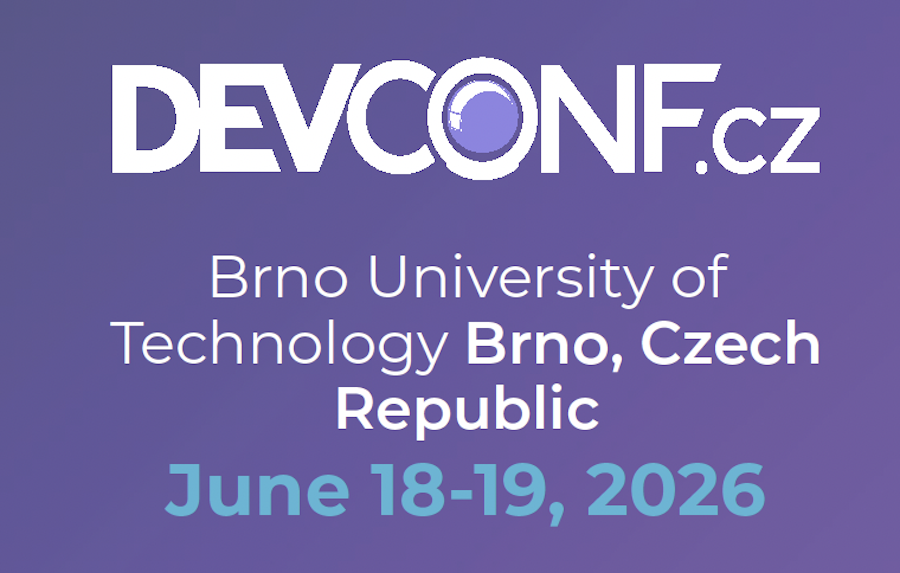
DevConf.cz is back in Brno June 18-19. This premier community-led event features a packed agenda of AI, security, and open research talks. It’s a strong showcase for how collaborative innovation tackles tough tech challenges. Here we’ve highlighted a few presentations that demonstrate the work of Red Hatters with our academic partners in Czechia.
Red Hat-university connections
Surgery on a brain: live-patching facts in LLMs with ROME
Thursday, June 18 | 12:30 pm
Speakers: Jakub Reš (Brno University of Technology, FIT) and Matej Olexa (Brno University of Technology, FIT)
Updating specific facts within massive models typically requires expensive and slow retraining that can disrupt unrelated behaviors. Using Rank-One Model Editing (ROME), this research treats model weights like a precise database, allowing for surgical updates to “knowledge neurons” to correct facts or mitigate malicious injections efficiently.
Survival of the safest: automating LLM defense with genetic programming
Friday, June 19 | 2:00 pm
Speaker: Petr Kaška (Brno University of Technology, FIT)
Securing large language models often involves a reactive game of manually patching filters that attackers easily bypass. This research introduces an open source framework that uses genetic programming to automatically evolve defensive layers and system rules, strengthening models without altering their underlying weights.
Usable cybersecurity assessment tools
Thursday, June 18 | 12:55 pm
Speaker: Mariia Bakhtina (Masaryk University)
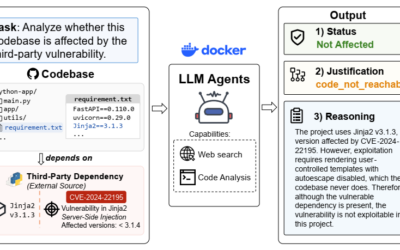
The EU-funded CCAT project focuses on transitioning academic security prototypes into professional-grade tools with a focus on real-world usability. The toolset includes TLS-Scanner for client-server configuration, SCRUTINY for hardware cryptographic implementations, and sec-certs for analyzing the landscape of security certifications and vulnerabilities.
From SBOM to dependency stacks: making software structure visible
Thursday, June 18 | 1:55 pm
Speaker: Peter Štefunko (Masaryk University, Red Hat intern)
Understanding the fragile web of software dependencies is critical for system stability and security. This project utilizes real-world data to transform data into visible, actionable dependency stacks, helping developers navigate the pitfalls of modern software architecture.
Other highlights
How I learned to stop worrying and love CVEs—Hummingbird
Thursday, June 18 | 9:30 am
Speakers: Stef Walter (Red Hat) and Valentin Rothberg (Red Hat)
With the explosion of CVEs making manual vulnerability assessment untenable, new automated approaches are required. The Hummingbird project demonstrates a solution using minimal, distro-less containers built as close to upstream as possible on a fully automated supply chain to deliver software with zero known CVEs at the time of release.
Beyond the transformer wall: scaling reasoning to the edge with LFM 2.5
Thursday, June 18 | 10:35 AM
Speaker: Mitul Sharma (Red Hat)
While trillion-parameter models dominate the cloud, the real-world demand for private, low-latency, and energy-efficient intelligence is growing at the edge. Liquid AI’s LFM 2.5-1.2B-Thinking achieves frontier-grade reasoning in a sub-1GB RAM footprint using a hybrid “Liquid” architecture. This lightning talk explores the shift from probabilistic chat to deliberative reasoning on consumer hardware, proving you don’t need a datacenter to build a thinking agent.
Inside MoE optimization: a Profiler-guided tour of torch.compile and vLLM
Thursday, June 18 | 12:30 PM
Speakers: Parshant Sharma (Red Hat) and Ayush Satyam (Red Hat)
This talk covers optimization strategies for Mixture of Experts (MoE) inference using PyTorch 2.x’s compilation stack alongside vLLM’s serving framework. We will use Profiler traces to illustrate four key areas for optimization, including kernel fusions and memory layout optimization. Attendees will learn how to identify memory-bound versus compute-bound expert execution and validate that compiled MoE forward passes maintain batch size flexibility.
Enhancing upper limb rehabilitation with unsupervised machine learning models
Thursday, June 18 | 4:15 PM
Speaker: Priscila Gutierres (Red Hat)
This talk presents a system enhancing upper limb rehabilitation using unsupervised machine learning to classify movement patterns and track patient recovery. We will demonstrate the architecture and a clinical dashboard that visualizes biomechanical metrics. Learn how data-driven insights empower professionals to objectively monitor progress and optimize treatment protocols beyond traditional methods.
The open source way: how community collaboration is fixing the future of tech regulation
Friday, June 19 | 11:00 am
Speaker: Roman Zhukov (Red Hat)
As the regulatory landscape shifts with acts like the EU Cyber Resilience Act, the open source community has stepped up to ensure these laws align with open values. This talk explores how engineers entered the negotiation rooms to fix critical bugs in the legislation and standards .We will look at the technical reality behind the CRA Open Source victory, translating “Secure by Design” for open source directly into European Standards. We will also reframe Digital Sovereignty into the real engineering values of innovating resilience, quality, and security that come from transparency and freedom of open source .
What can A2A do for you and what can you do for it
Friday, June 19 | 2:00 PM
Speaker: Jiri Podivin (Red Hat)
The proliferation of multiple agentic AI systems has created a need for a common protocol, enabling agents to share information, delegate tasks, and coordinate behavior. The Agent2Agent (A2A) protocol is an emerging industry answer to this issue, currently being developed in open source under the stewardship of the Linux Foundation. In this talk, we will examine the protocol architecture, implementation patterns for adding A2A capabilities, and how the future direction of its development is governed.
Symmetric memory in PyTorch: 10x faster GPU communication for AI
Friday, June 19 | 2:45 PM
Speaker: Rohit Singh Rathaur (Red Hat)
This talk introduces symmetric memory: zero-copy RDMA between GPUs using NCCL 2.29’s one-sided APIs to overcome bottlenecks in LLM serving. We explore primitives that enable direct GPU memory access with significantly lower latency and demonstrate a 35% throughput improvement in tensor-parallel LLM inference. Attendees will learn the architecture, compiler integration challenges, and production guidance for implementing symmetric memory in AI applications.
And for fun
In addition to the deep technical tracks, don’t miss the sweetest meetup at the conference—the Candy Swap—where attendees are encouraged to bring a treat and share in the community spirit.
Thursday, June 18 | 2:00 pm

For more details on these sessions and many others, please check the full schedule at devconf.cz.