







A long journey, briefly: lessons from a career of building the tools that build new worlds
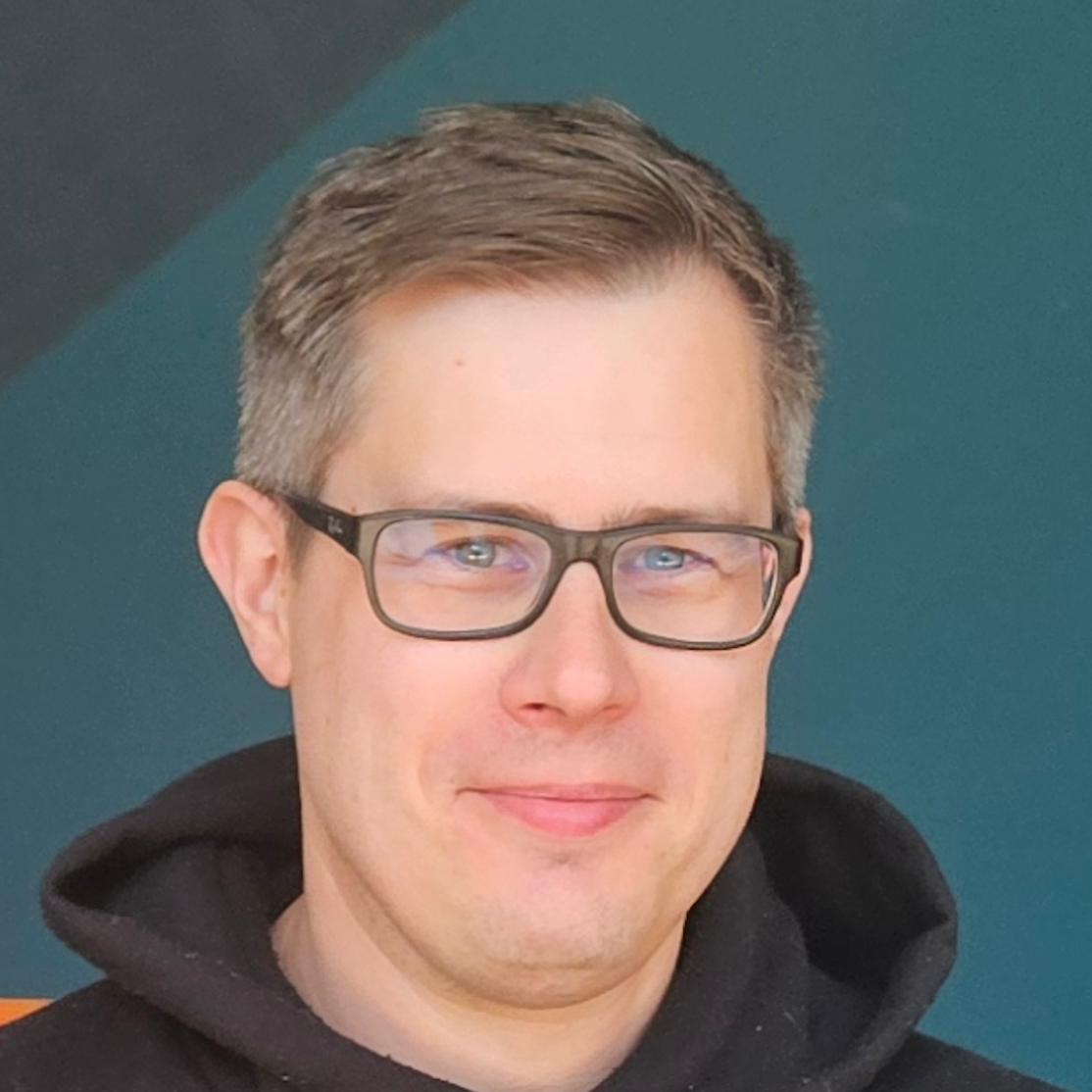
Open source and academia have a common axiom: sharing is good. We hope that what we build and discover will be used constructively. As I look back at a couple decades of my career, I see a recurring theme: operating, improving, and building tools for others. I joined Red Hat specifically for the opportunity to hone the frontier of AI tooling into sharper scientific instruments. I truly believe that knowledge should be shared freely. This is how I give back to the society and technology that bring me fruitful joy.
My journey began at a manufacturing company, writing data translation shims between truly ancient systems and slightly less ancient systems. The system administrators declared me competent, and soon I was writing reports against databases that kept the company moving. I realized that I had a solid grasp on the tip of a mountain, and I wanted to understand how it all fits together. I enrolled at a university, and my work became impactful. I maintained and improved a platform that connected students with volunteer opportunities in the local community. This was the first time that I felt like I was using my powers for good.
After a handful of years it was time to move on. I joined the corporate world to see what the pace of business had to offer. I helped keep that world moving by nudging application delivery controllers (ADCs) and web application firewalls (WAFs) toward easier consumption, and hopefully wider adoption. I prototyped interesting things, mainly network functions and software proxies. I ran a lab where people assembled novel and compelling multi-product solutions. A couple years ago I joined a company that wanted to democratize cloud computing. The recurring theme is that I am happy when I build the fundamental pieces that enable larger action, often in ways that I did not intend. I enjoy being catalytic.
Then I heard about a role with Red Hat, and I was hooked by the opportunity to share my talent and effort with academia. I have the privilege of operating, improving, and building tools for researchers and the open source community. It’s elative.
Platforms and perspectives
My main goal when managing any platform is that it should be like electricity. A user does not need to know how it works, but they are welcome to ask. A user should never worry if the lights will come on, only if they remembered to turn them off. Even that concern should be minimized where possible. I want to deliver reliability, consistency, availability, and utility.
What do people do with platforms? It turns out that “use someone else’s computer” captures most of it: delivering messages asynchronously, offering uninterruptible services, producing artifacts, analyzing vast amounts of data. In other words, things that cannot be reasonably accomplished on a personal machine. Most importantly, people collaborate. They share. They build. In my experience, this is surprisingly consistent between private industry and public institutions. The difference is that companies do not default to sharing their findings freely, while public institutions strongly prefer to share with the world.
Computers work so people can learn, explore, and play.
There is also an implicit goal for every platform: reduce human toil. This is my favorite part of the problem space. Computers work so people can learn, explore, and play. Reducing the time and effort to start a project from “I need to buy my own hardware, then install and configure software, and then…” to “I need to open a ticket” is empowering. More importantly, a well-positioned platform lowers the barriers to entry and catalyzes research. I need merely to glance at my heap of half-completed projects to understand the importance of easy access to tools and resources.
The possibilities are fascinating: I can delegate tasks to an agent using reasonably plain language. With the advent of agentic and multimodal frameworks, I just might start addressing a computer by name, a la Star Trek. I must consider a fundamental change in how I interact with systems. The difference is that instead of asking a device in my house to turn down the volume, I can ask an agent to optimize a CI/CD pipeline for minimum energy consumption at the expense of wall time. I can ask an agent to be my “rubber duck” as I talk through a self-inflicted technical issue.
Neat.
We stand on the shoulders of giants
Our world is a cumulative effort. Writing, art, and now digital information allow civilization to create, discover, and improve generation-by-generation, second-by-second. The metaphor, standing on the shoulders of giants, is not new. However, the velocity with which we are building layers of giants is unprecedented.
We are approaching, or possibly passing through, an inflection point where giants are not necessarily human. Is it appropriate to cite an LLM as a co-author for a paper? Is the training set a required citation for AI assistants performing data analysis?
Wrapping a framework around models can reduce the time required to test a hypothesis. Karpathy’s autoresearch method uses models to experiment with tuning models. The options for using agents to collate and synthesize are legion. Models are fantastic tools, but they are neither responsible nor accountable.
Raw creativity and inspiration are still gifts of the human experience. Collaboration is a fundamental human drive. For now, the state of the world is that giants can enlist demi-giants to accelerate their work.
Operating Shoulders-as-a-Service
The current state of training and inference is that researchers, models, and agents require more computing power than most people can afford to own outright. The computing world is defining and exploring architectures and paradigms that can change consumption patterns monthly.
From a platform perspective, I must be aware of, yet not beholden to, the usage patterns. I do need to guarantee that workloads cannot impact their neighbors. I must ensure that hardware is running nominally. I must verify that the software components are secure and updated.
The interesting part, for me, is the research itself. Technical explorations tackle problems like combining multiple agents for multi-modal solutions, or exploring the integration of model-as-a-service with CI/CD practices. We explore the boundaries of using open models in place of closed models. And yet, these are all tools that scientists in other domains may use to advance their research. That is the aspect that brings me the most joy. Perhaps a revolutionary medical imaging technique will be developed using something I built.
The Mass Open Cloud, the open source community, the interconnected world—it is all so much more than any person could accomplish in a lifetime. A horde of nerds is a fantastic force of invention. I am truly happy to be a part of it.
Every researcher stands on the shoulders of giants and lends their shoulders to the next tier. I get to build an open laboratory for giants.