


Red Hat Research Quarterly
Stop talking, start doing: how universities rise to the challenge of the AI revolution
North Carolina State University Provost Jim Pfaendtner shares a front-row seat to how major research institutions and industry collaborate to make AI scalable, secure, and open.

Volume 8, Issue 1 • ISSN 2691-5278
Departments
Features
Inside this issue

Robby Stahl
A long journey, briefly: lessons from a career of building the tools that build new worlds Open source and academia have a common axiom: sharing is good. We hope that what we build and discover will be used constructively. As I look back at a couple decades of my career, I see a recurring theme: […]

Simon Sundberg

Simone Ferlin-Reiter

Anna Brunstrom

Toke Høiland-Jørgensen

Jesper Dangaard Brouer
Meet netstacklat, an open source eBPF tool developed with university researchers to provide critical visibility into host network latency and enable faster response times. Any application that communicates across the network (which today is most applications) is impacted by network latency, with high latency translating directly to worse application response times, which in turn leads […]

Sai Sindhur Malleni

José Castillo Lema

Raúl Sevilla Canavate

André Bauer

Aleksei Vasilevskii
As GenAI inference becomes a dominant workload, researchers are evolving new Kubernetes-native projects to address bottlenecks, delivering the scalability and efficiency AI workflows require. The rapid rise of generative AI has fundamentally reshaped cloud computing. From sophisticated training pipelines to high-throughput, real-time inference, modern AI workloads demand dynamic access to expensive, heterogeneous resources, particularly GPUs […]

Yunshi Wen

Wesley M. Gifford

Chandra Reddy

Lam M. Nguyen

Jayant Kalagnanam

Anak Agung Julius
As zero-shot performance gains flatten, researchers are rethinking the field: separating architectural progress from data-driven gains, and introducing a language-driven paradigm for TSFMs. Ask a power grid operator, a hospital administrator, or a logistics planner what keeps them up at night, and somewhere on the list will be a forecasting problem. How much electricity will […]

Mingzhi Zhu

Stacy Patterson

Michele Merler

Raju Pavuluri
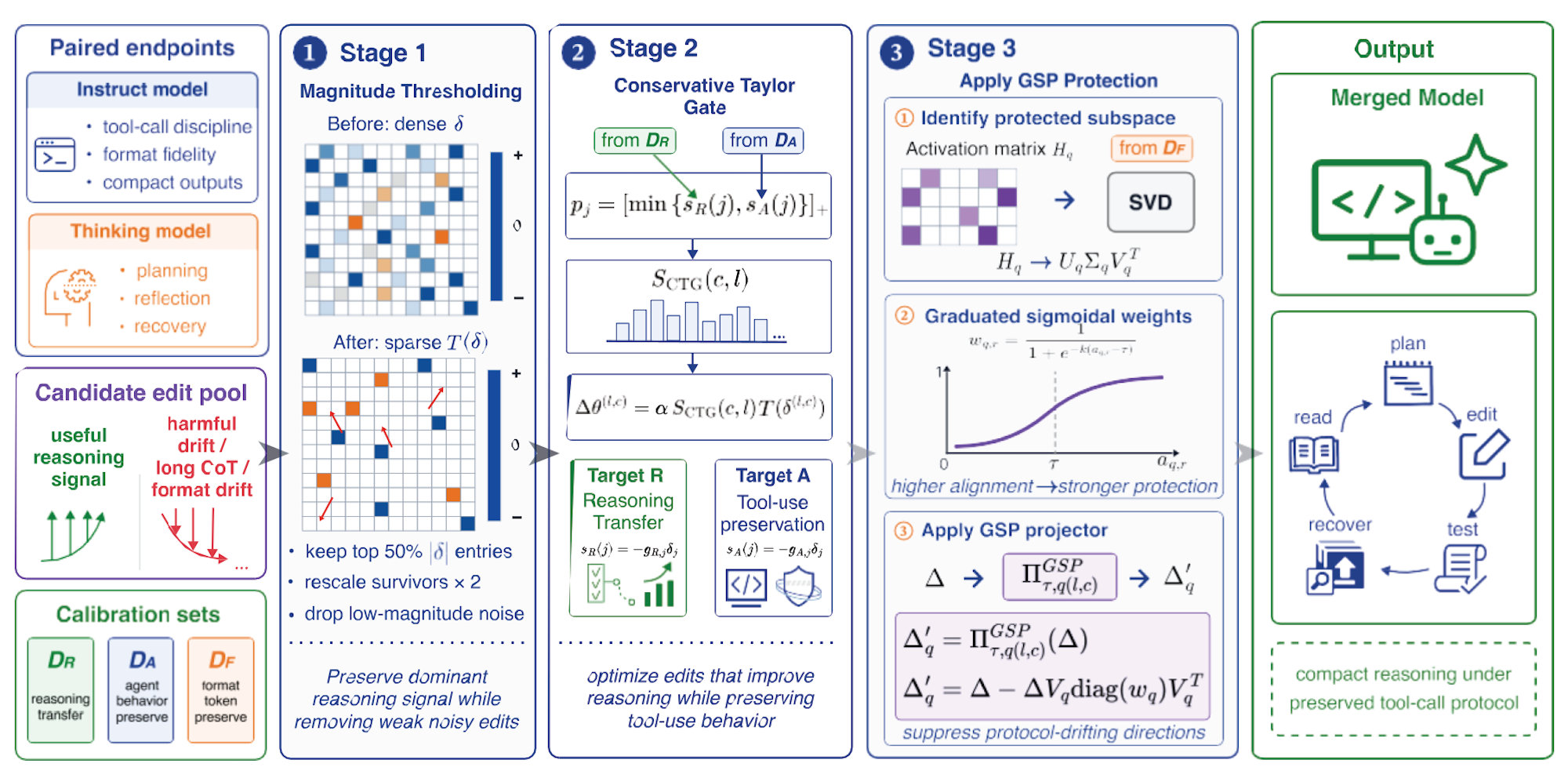
Can we enhance AI reasoning without sacrificing the reliability of coding tools? The CRANE method proves it’s possible. A stronger reasoning model is not automatically a better coding agent. For many AI systems, the standard approach is to take a model that can reason longer, plan more carefully, and recover from mistakes, then place it […]


Researchers are proving that small open source models, using a well-established algorithm, can compete successfully with proprietary frontier models. Large language models continue to improve through larger architectures and more training data, but recent evidence suggests diminishing returns from scaling model size alone. A complementary approach—inference-time scaling (ITS)—allocates more computation during inference to improve performance […]

Not so long ago, industry research meant exploring ideas that were typically anywhere from 3 to 10 years out from actual product implementation (even faster in open source). If you’ve forgotten that definition, you’re excused. The AI era has found researchers building express lanes and wormholes throughout the research-to-production pipeline. Going faster doesn’t have to […]